
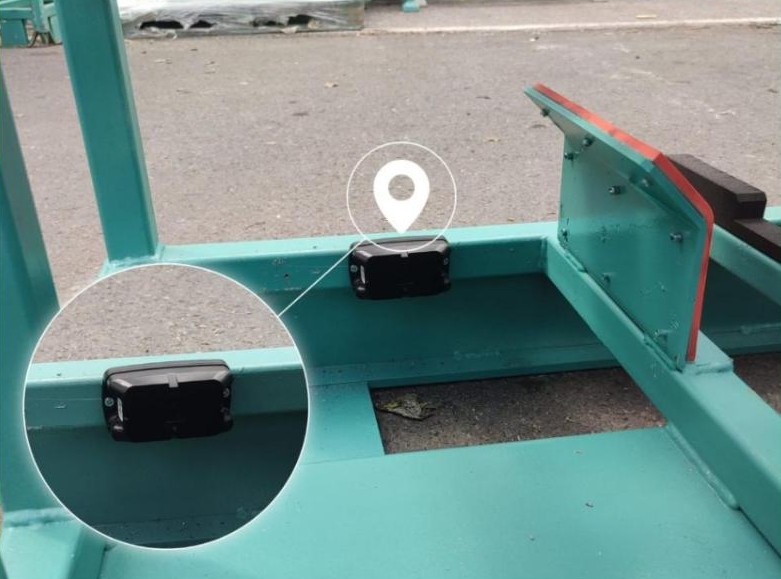
InVirtus Technologies designs and sells GPS trackers, Bluetooth tags and RFID readers for returnable transport items (RTIs): pallets, roll cages, stillages, racks, IBCs and totes. This guide says which device belongs on which item, with our public unit prices. It also explains why we think a GPS tracker on a standard pallet is usually the wrong purchase.
In short
- Best pallet tracker for most fleets: a Bluetooth (BLE) tag at about €15, read by anchors at your dock doors. Not a GPS tracker.
- GPS earns its place on items worth more than about €500 that leave your sites: stillages, special racks, IBCs, air cargo units.
- Our rule: the device should cost less than 10% of the item it protects.
- InVirtus prices, hardware only: BLE tags from €12.20 to €19.90, GPS trackers from €51.90 to €67.20, per unit excl. VAT at the largest volume tier.
- Why now: the EU packaging regulation (PPWR) has applied since 12 August 2026. Reuse targets start on 1 January 2030, and reuse has to be counted.
▶ Watch the short video on YouTube
RTI, RTP, RPC, KLT: one family, many names
Buyers, standards bodies and suppliers use different words for the same assets. If you search for a pallet tracking system, you will meet all of these.
| Term | Stands for | Where you see it |
|---|---|---|
| RTI | Returnable transport item | GS1 and ISO vocabulary. Each RTI can carry a GRAI, the GS1 identifier for returnable assets. |
| RTP | Returnable (or reusable) transport packaging | Packaging and automotive industries. |
| RPC | Reusable plastic container | Fresh produce and retail crates. |
| KLT / GLT | Small / large load carrier (from the German Kleinladungsträger, Großladungsträger) | Automotive supply chains. |
| IBC | Intermediate bulk container | Chemicals, food ingredients, liquids. |
| ULD | Unit load device | Air cargo pallets and containers. |
| Roll cage, stillage, dolly, tote | Wheeled cage, steel rack, wheeled base, small bin | Retail, parcel networks, heavy industry. |
Why 2026 changes the calculation
The EU Packaging and Packaging Waste Regulation (Regulation 2025/40, known as PPWR) has applied since 12 August 2026. From 1 January 2030, 40% of transport packaging such as pallets, crates, boxes and IBCs must be reusable within a reuse system. The target rises to 100% for flows between a company's own sites and for deliveries to another company in the same Member State. In 2026 the Commission exempted pallet wrap and straps from that 100% rule, but not pallets or crates (AGRINFO summary, revised May 2026).
What this means in practice: more returnable items in circulation, and a need to prove how many times each one comes back. The regulation asks for reuse, not for trackers. But a fleet you cannot count is a fleet you keep rebuying. Check the details with your compliance team; this is not legal advice.
Our rule: the tracker should cost less than 10% of what it protects
Most guides start with battery life. We start with the price of the thing you are tracking. Here is the minimum item value at which each InVirtus device stays under 10% of that value.
| Device | Technology | Price from (per unit, excl. VAT) | Makes sense on items worth at least |
|---|---|---|---|
| ivBeacon Hybrid (coming soon, pre-order) | BLE + RFID tag | €12.20 | €122 |
| ivBeacon Lite | BLE tag, 5-year battery, IP67 | €14.90 | €149 |
| ivBeacon Micro | Compact BLE tag | €15.40 | €154 |
| ivBeacon EosFlex | Battery-free BLE tag, powered by indoor light | €19.90 | €199 |
| ivTrack Classic | GPS + BLE tracker, Europe, up to 8 years | €51.90 | €519 |
| ivTrack Evo | GPS + BLE tracker, 190+ countries, up to 6 years | €67.20 | €672 |
These are hardware prices at the largest volume tier of the InVirtus 2026 price list (10,000 units for tags, 50,000 for trackers). Smaller orders cost more per unit. At that tier, a GPS tracker costs 3.5 to 4.5 times more than a BLE tag.
The market shows the same gap. On 17 November 2026, Google's US product results for "pallet GPS tracker" ranged from $10 for a Bluetooth pallet beacon to $249.99 for a rugged GPS unit.
The 10% rule has one exception: when the load is worth far more than the item carrying it. A pallet of aircraft parts is not a pallet problem. Track the load.
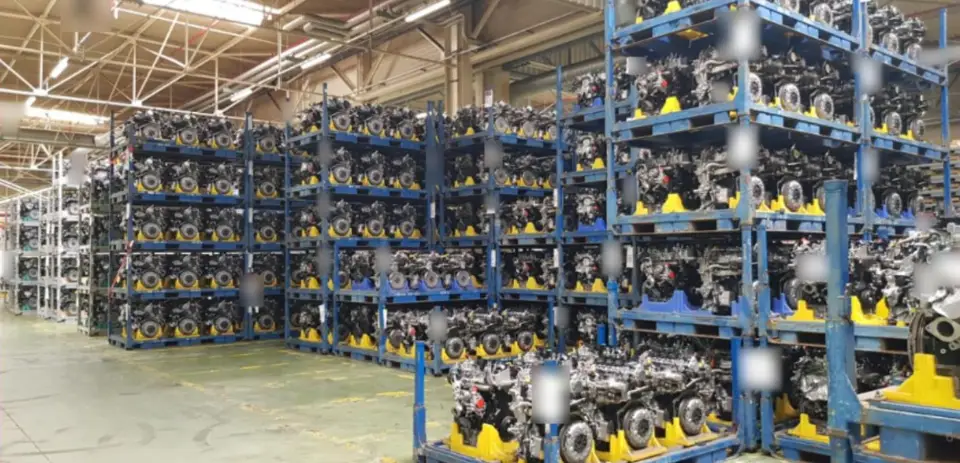
In November 2026, a major carmaker walked us through its plan to track racks and containers between its plants and its suppliers. The mix it had in mind: about nine Bluetooth tags for every GPS tracker. The companies running the largest loops have already done this maths. GPS goes on the few items that travel far and cost a lot. Everything else gets a tag.
Best tracking device by type of returnable item
| Item | Our pick | Why |
|---|---|---|
| Standard pallet | BLE tag (ivBeacon Lite), anchors at dock doors | The tag costs less than losing the pallet twice. GPS does not pass the 10% rule. |
| Roll cage, dolly | BLE tag, or BLE + RFID where cages pass a portal | Large fleets, fixed routes between depots and stores. You need counts per site, not a dot on a map. |
| KLT, tote, RPC | Battery-free BLE tag (ivBeacon EosFlex) indoors, or RFID | Thousands of small items. No battery to replace, as long as they see light: the tag works from 30 lux. |
| Stillage, special rack, GLT | GPS tracker (ivTrack Classic) | Custom-built, expensive, sent to suppliers who have none of your equipment on site. |
| IBC | GPS tracker, or BLE tag if the loop stays between your sites | Long stays at customers. Tell us if the IBC enters an ATEX zone: it changes the hardware choice. |
| ULD, air cargo items | GPS tracker tested for flight (ivTrack Evo) | Tested against RTCA DO-160G. Airlines approve trackers one by one, so check the approval list. |
Three set-ups we would quote
1. Closed loop between your own sites
Put a BLE tag on every item and an anchor at each dock door or storage zone. The ivScan Poseidon (from €207) runs on battery and LoRaWAN, so there is no cabling. The ivScan Chronos (from €186) uses mains or PoE. Each anchor covers up to 50 m indoors. You get stock per site and dwell time per item.
2. Open loop with suppliers and customers
You cannot install anchors at 40 suppliers. Use GPS trackers on the expensive items, because they report from anywhere with no equipment on site. On cheaper items, track a sample of the fleet to find where the loop leaks, then fix that site.
3. Mixed fleet with RFID already in place
If items already carry UHF RFID labels, keep them. The ivScan Hydra (from €990) reads RFID and BLE in one PoE reader, at up to 250 reads per second. Add BLE or GPS only where a portal cannot see the item.
Five mistakes we would talk you out of
1. A GPS tracker on every pallet. The maths above rarely works. Tag the pallet and track the loop.
2. Buying on the battery headline. "Up to 8 years" depends on how often the device reports. Ask for the figure at your reporting rate.
3. Forgetting who fits 10,000 devices. Fixing time per item matters more than the last euro on the unit price.
4. RFID portals at sites you do not control. Passive RFID only works where a reader is installed. Outside your walls, it sees nothing.
5. Battery-free tags in the dark. A light-powered tag is ideal on a shop floor. It is the wrong choice for pallets stacked in an unlit trailer for weeks.
What InVirtus already tracks
Frequently asked questions about pallet and RTI tracking devices
What is the best GPS tracker for pallets?
For a standard pallet, usually none: a GPS tracker costs several times the pallet. InVirtus Technologies recommends a BLE tag such as the ivBeacon Lite (from €14.90) read by anchors at dock doors. Use a GPS tracker such as the ivTrack Classic (from €51.90) when the pallet or its load is worth more than about €500 and leaves your sites.
How much does a pallet tracker cost?
InVirtus BLE tags start at €12.20 to €19.90 per unit and GPS trackers at €51.90 to €67.20, excluding VAT, hardware only, at the largest volume tier. Anchors start at €186. See the asset tracking system cost guide for a full budget.
What is the difference between RTI and RTP?
They describe the same assets. RTI (returnable transport item) is the GS1 and ISO term for a pallet, crate, roll cage or rack that comes back after use. RTP (returnable transport packaging) is the packaging industry's word for it.
Can I track pallets without GPS?
Yes. A Bluetooth tag on the pallet is detected by fixed anchors at each site, which gives you stock per site and time spent there. This works wherever you can install an anchor. For sites you do not control, you need GPS or a sample of GPS-tracked items.
Does the EU packaging regulation (PPWR) require tracking devices?
No. PPWR requires a share of transport packaging to be reusable from 1 January 2030 and asks operators to calculate their reuse rates. Tracking is one way to count rotations and losses, not a legal obligation.
Can a GPS tracker travel by air on a ULD or air cargo pallet?
Only if the airline accepts it. The ivTrack Evo from InVirtus Technologies has been tested against RTCA DO-160G for electromagnetic compatibility and is approved airline by airline. See the aviation GPS tracker page.
Read also: how a deployment works between plants and suppliers in reusable container tracking · sea and road containers in container GPS tracking · BLE vs RFID · GPS vs BLE.
Send us your fleet list, get a device per line
Tell us what you move, how many and where. We reply with a device and a price per item type, and a pilot plan on a few dozen items.
Request a pilotSee products and prices
